Snake Plant
Complete care guide for Snake Plant.
Plant Care Basics
Snake Plant
About -
Snake Plant
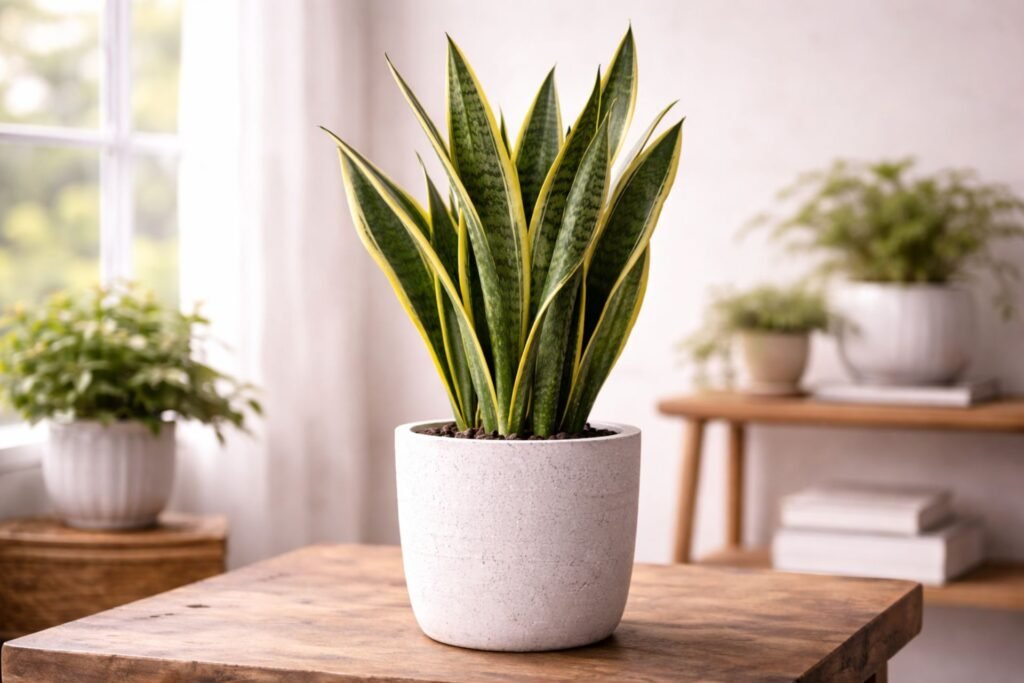
The Snake Plant, also known as Mother-in-Law’s Tongue, is one of the most popular low maintenance indoor plants for modern homes. Native to West Africa, this hardy plant is famous for its upright sword-shaped leaves and exceptional air-purifying qualities. Snake Plants thrive in bright indirect light but can easily tolerate low light conditions, making them perfect for bedrooms, offices, and apartments.
One of the biggest advantages of growing a Snake Plant indoors is its drought tolerance. It requires watering only every 2–3 weeks, allowing the soil to dry out completely between waterings. Overwatering is the most common mistake, so well-draining soil is essential.
Snake Plants are also known to help filter toxins from indoor air, improving air quality naturally. Although they are extremely beginner-friendly, they are mildly toxic to pets if ingested.
If you’re looking for a stylish, resilient, and air-purifying houseplant that requires minimal care, the Snake Plant is an excellent choice.
Sunlight Guide
Watering Guide
Soil Guide
Repotting Guide
Temperature Guide
Winter Care Guide
Growth Information
Frequently Asked Questions
Snake Plants should be watered every 2–3 weeks. Always allow the soil to dry completely between waterings, as overwatering is the most common cause of root rot in indoor Snake Plants.
Yes, Snake Plants tolerate low light conditions very well, making them ideal for bedrooms and offices. However, they grow faster in bright indirect light.
Snake Plants are known to remove toxins like formaldehyde and benzene from indoor air, making them one of the best air purifying indoor plants.
Yes, Snake Plants are toxic to cats and dogs if ingested. Keep this plant away from pets to avoid digestive irritation.